Can You Use AI Art Commercially?
The short answer: yes, in most cases. The longer answer depends on which platform you use, what plan you are on, and how you intend to use the images. This guide breaks down every major platform's terms and the legal landscape in 2026.
Commercial Licenses by Platform
| Platform | Commercial Use | Conditions |
|---|---|---|
| Midjourney | Yes (paid plans) | Any paid subscription. Free trial images are not commercial. |
| ChatGPT / DALL-E | Yes (all plans) | OpenAI grants full usage rights including commercial on all tiers. |
| Leonardo AI | Yes (paid plans) | Free tier is personal use only. Paid plans include commercial rights. |
| Stable Diffusion | Yes (fully open) | Open-source. No restrictions on local generations. Check specific model licenses. |
| Adobe Firefly | Yes | Trained on licensed data. Designed specifically for commercial safety. |
| Flux | Varies | Schnell (open) vs Pro (commercial license required for some uses). |
Legal Considerations in 2026
Copyright Status of AI Art
The legal landscape is still evolving. In the United States, the Copyright Office has ruled that purely AI-generated images without significant human creative input cannot receive copyright protection. However, images where a human provides substantial creative direction, selects from many outputs, and makes meaningful edits may qualify for protection. The "threshold of creativity" test is applied case by case.
AI Art and Trademark Issues
You cannot use AI to generate images that include trademarked logos, brand names, or recognizable characters owned by others. Even if the AI generates something that resembles a trademark, using it commercially could result in infringement claims. Always check your outputs for unintended brand similarities.
Disclosure Requirements
Some jurisdictions require disclosure of AI-generated content in advertising and commercial communications. The EU's AI Act includes transparency requirements. Even where not legally mandated, disclosure is strongly recommended to avoid consumer deception claims.
Safe Ways to Use AI Art Commercially
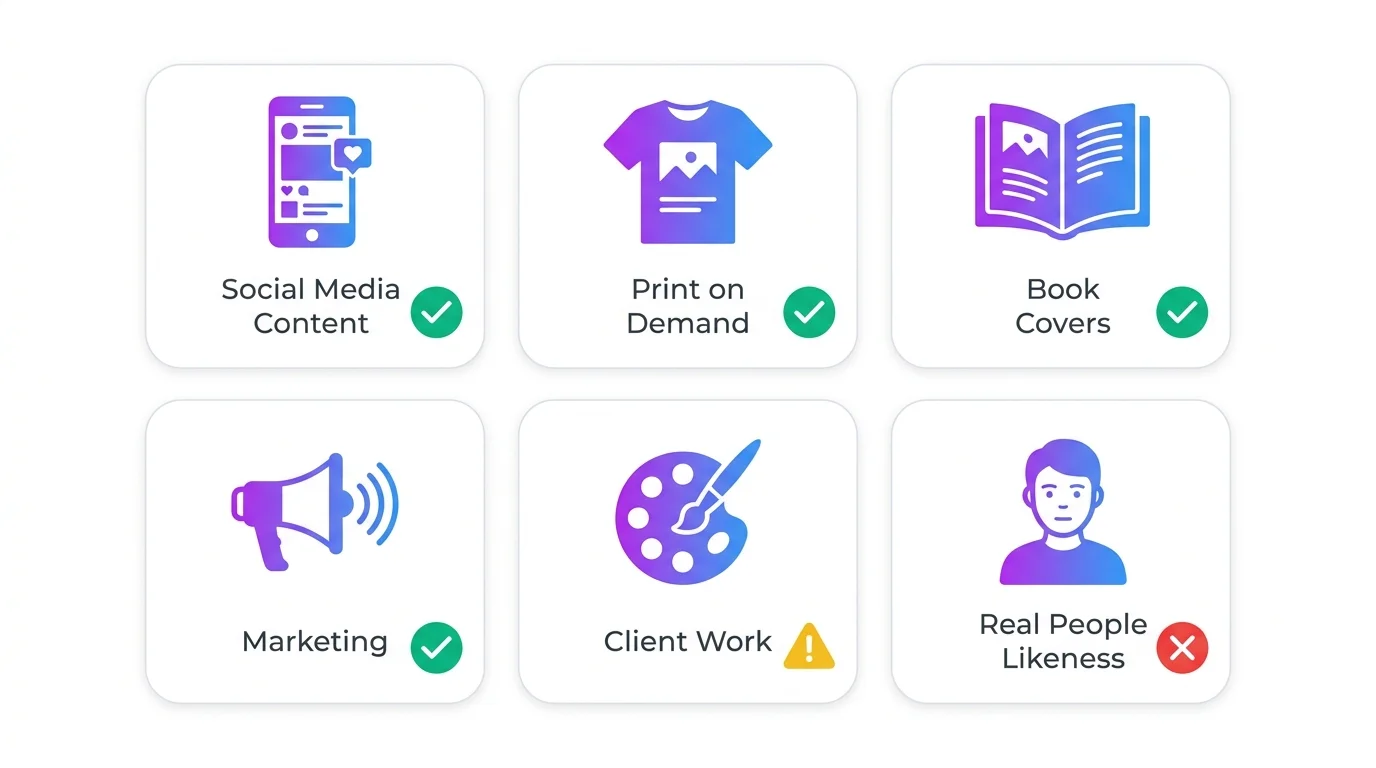
Social Media Content
Creating AI art for social media posts, stories, and ads is widely accepted. Most platforms allow AI-generated content with disclosure. This is the most common commercial use case and carries minimal legal risk.
Print-on-Demand
Selling AI art on products through services like Redbubble, Society6, and Etsy is permitted when your generator's license allows commercial use. Ensure images are high resolution (upscale if needed) and unique enough to stand out in the marketplace.
Book Covers and Illustrations
Self-published authors increasingly use AI for book covers and interior illustrations. Major platforms like Amazon KDP accept AI-generated cover art. Some publishers require disclosure. This is a growing market for AI art freelancers.
Marketing Materials
Using AI art in brochures, websites, presentations, and ads is commercially safe with most paid plans. Faster and cheaper than stock photography for many use cases. Adobe Firefly is specifically designed for this use case.
Client Work and Freelance
Providing AI art as a service to clients is commercially valid. Be transparent about your tools and ensure your license covers client deliverables. Position yourself as a creative director using AI tools, not just a generator operator. See our portfolio guide.
What You Cannot Do
Copying Specific Artists' Styles
While not always illegal, generating images "in the style of [living artist name]" and selling them is ethically problematic and may face legal challenges. Use generic style descriptions ("impressionist," "cyberpunk") rather than naming specific artists.
Using Real People's Likenesses
Generating images of real, identifiable people without their consent is a legal risk - especially for commercial use. Right of publicity laws protect individuals from unauthorized commercial use of their likeness. Use fictional characters or get explicit permission.
Claiming Full Human Authorship
Representing AI-generated work as entirely human-made is deceptive and may violate consumer protection laws. In competitions, grants, or contexts that specifically require human-created art, submitting AI work without disclosure can have serious consequences.
Best Practices Checklist
- Verify your license: Confirm your plan includes commercial rights before using images for business
- Be transparent: Disclose AI involvement, especially in advertising and client work
- Avoid real people: Do not generate recognizable real individuals for commercial use
- Check for trademarks: Review outputs for unintended brand logos or trademarked characters
- Use generic styles: Describe styles generically rather than naming specific living artists
- Keep records: Save your prompts, settings, and generation metadata as documentation
- Add human creativity: Edit, compose, and curate AI outputs to strengthen any copyright claims
- Stay updated: AI art law is evolving rapidly - review platform terms and legal developments regularly