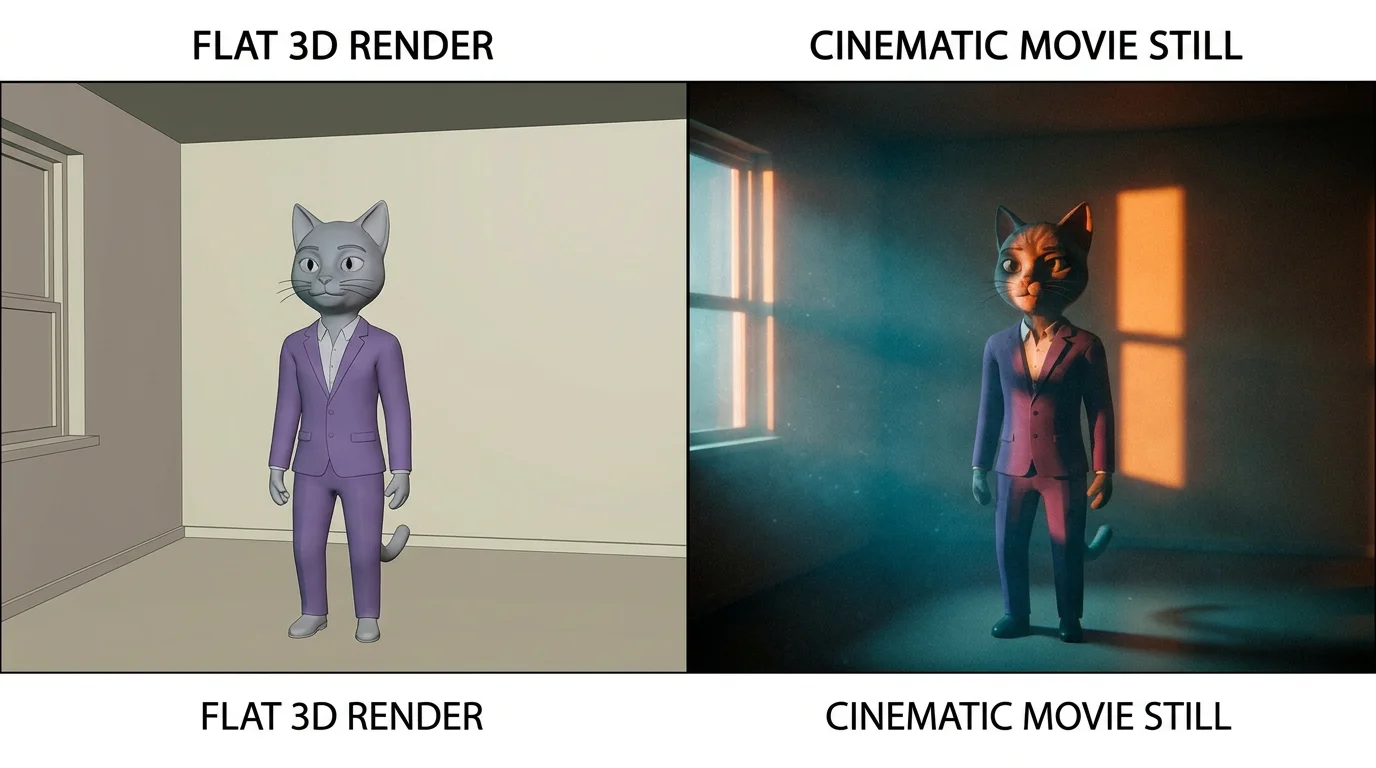
What Makes AI Art Look "Cinematic"?
Cinematic AI art mimics the visual language of film. It is not just about making images look "good" - it is about making them feel intentional, directed, and emotionally charged. Three elements separate cinematic AI art from generic output:
- Deliberate lighting: Real films never use flat, even lighting. Every light source serves a purpose - to create mood, guide the eye, or reveal character
- Purposeful camera angles: A low angle makes a character feel powerful. A tight close-up creates intimacy. These choices tell the story without words
- Color grading: Every major film has a carefully designed color palette. Teal and orange for action, desaturated for drama, warm golden tones for romance
Film Techniques in AI Prompts
Shot Types
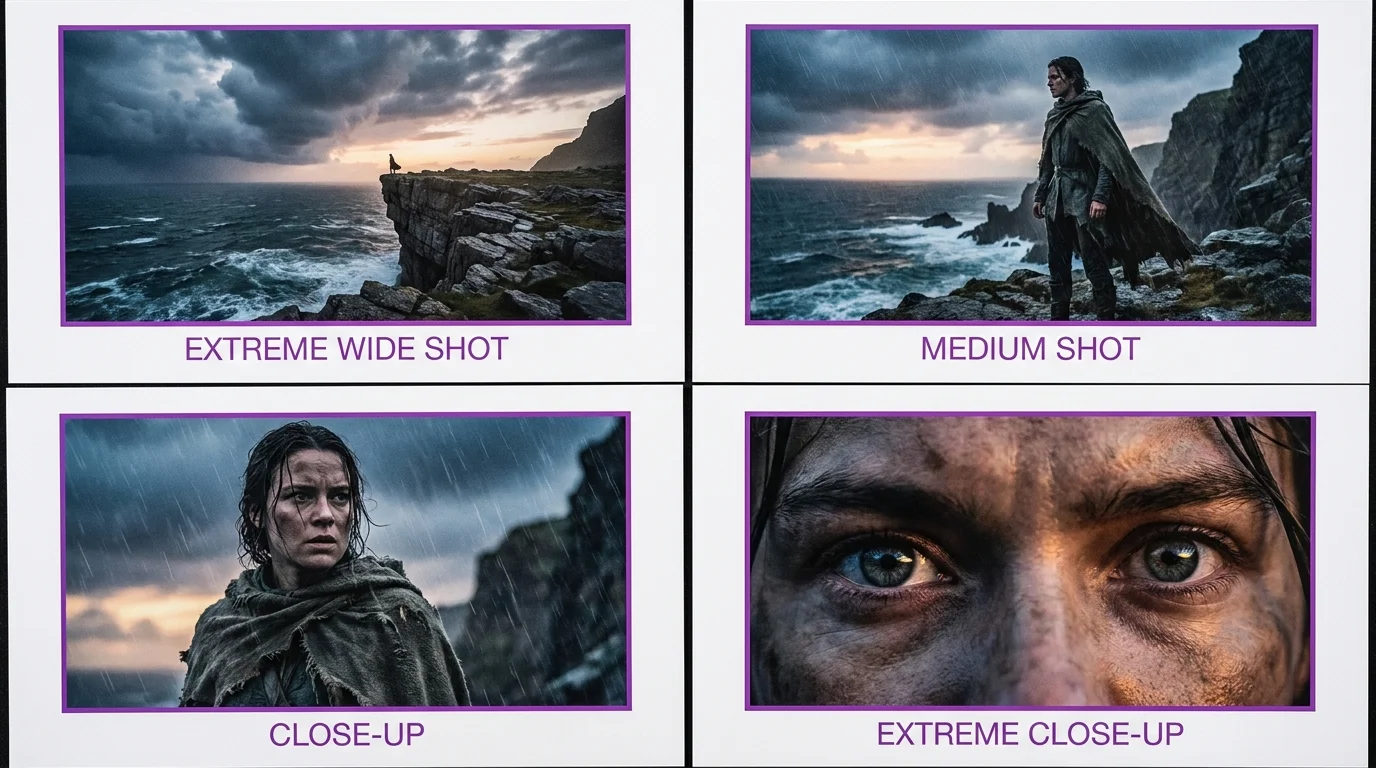
Each shot type communicates something different to the viewer. Here are the essential shots for AI storytelling:
- Extreme wide shot: "extreme wide shot, tiny figure in vast landscape" - establishes scale and isolation
- Wide/establishing shot: "wide establishing shot" - sets the scene, shows the environment
- Medium shot: "medium shot from waist up" - standard for dialogue and interaction
- Close-up: "close-up portrait" - reveals emotion and detail
- Extreme close-up: "extreme close-up on eyes" - maximum emotional intensity
- Over-the-shoulder: "over-the-shoulder shot" - creates perspective in two-character scenes
For a complete breakdown of every angle with visual examples, see our camera angles guide.
Depth of Field and Focus
Controlling what is sharp and what is blurred is one of the most powerful cinematic tools. "Shallow depth of field, subject in sharp focus, background beautifully blurred, bokeh circles" creates that professional look instantly. Use "deep focus, everything sharp from foreground to background" for establishing shots where you want to show the whole scene.
Color Grading Keywords
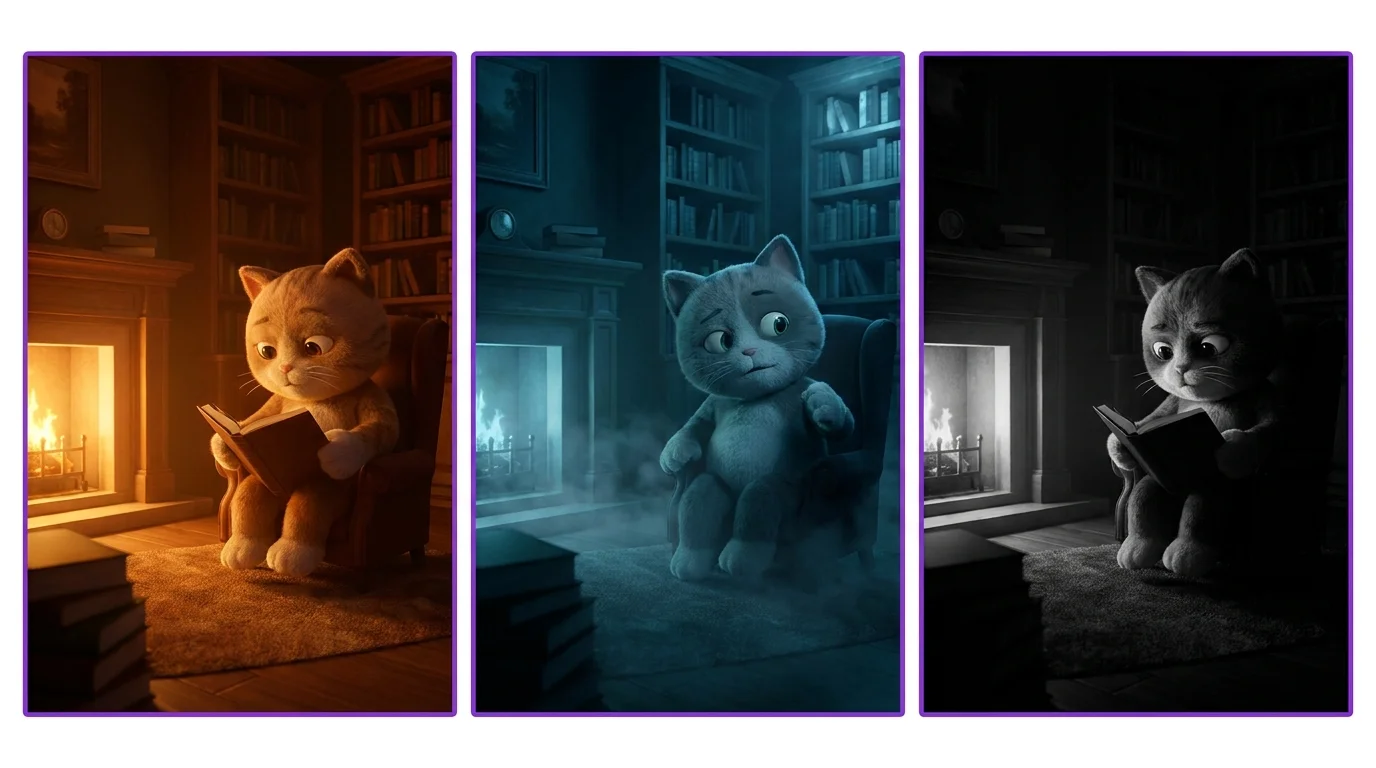
Color grading transforms the mood of any image. These keywords work across all AI generators:
| Color Grade | Prompt Keywords | Best For |
|---|---|---|
| Teal & Orange | teal and orange color grading, complementary colors | Action, blockbuster |
| Desaturated | muted desaturated tones, low saturation | Drama, indie |
| Warm Golden | warm golden color grade, amber tones | Romance, nostalgia |
| Cool Blue | cool blue steel tones, cold color palette | Thriller, sci-fi |
| High Contrast Noir | high contrast, deep blacks, film noir | Mystery, crime |
| Pastel Dream | soft pastel colors, dreamy ethereal tones | Fantasy, whimsical |
Film Grain and Lens Effects
Adding analog film characteristics makes AI images feel more organic and less "digital perfect":
- Film grain: "subtle film grain, 35mm film texture" - adds warmth and realism
- Lens flare: "anamorphic lens flare" - creates cinematic light streaks
- Chromatic aberration: "slight chromatic aberration" - mimics real lens imperfections
- Vignette: "natural vignette, darker edges" - draws focus to the center
- Film stock: "shot on Kodak Portra 400" or "Fuji Velvia colors" - specific color characteristics
Mood Boards for AI Stories
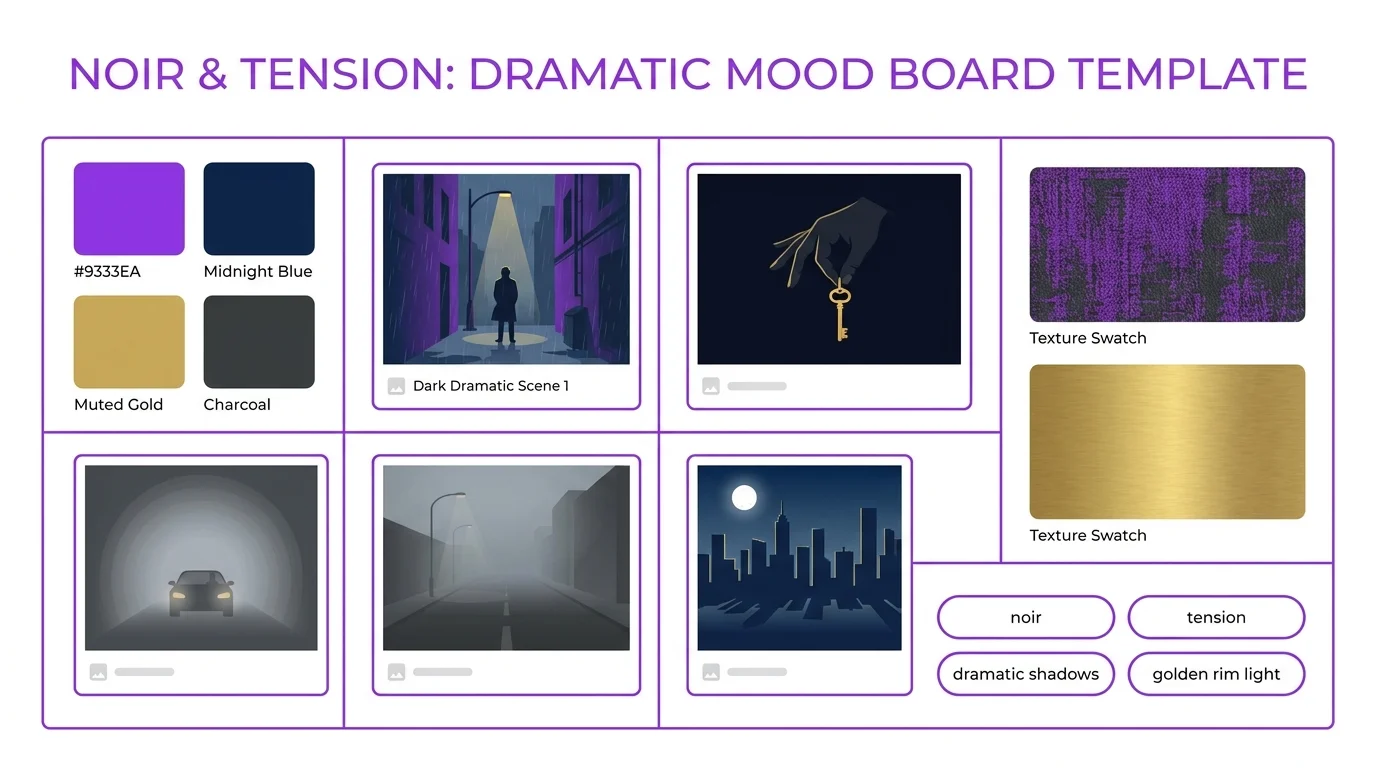
Building a Visual Mood Board
Before writing a single prompt, create a mood board. Collect 5-10 reference images that capture your target aesthetic - film stills, photographs, paintings, or existing AI art. Look for patterns across your references: What lighting do they share? What colors dominate? What camera angles are used? These patterns become your prompt keywords.
Translating Mood Into Keywords
Extract a "style DNA" from your mood board - a set of 5-8 keywords that appear in every prompt:
Paste this style DNA at the end of every scene prompt to maintain a consistent cinematic look across your entire story.
Emotional Storytelling Through Composition
Isolation
Show loneliness or vulnerability by placing a small figure in a vast environment. "Tiny figure standing alone in an enormous empty hall, high ceiling, dramatic scale contrast" - the emptiness tells the emotional story.
Power Dynamics Through Angles
Camera angle instantly communicates power relationships. Low angle looking up at a character makes them dominant. High angle looking down makes them vulnerable. Eye-level creates equality between character and viewer. Switching angles between scenes shows shifting power dynamics in your story.
Tension Through Framing
Dutch angle (tilted camera) creates unease and instability - perfect for thriller or horror scenes. Tight framing (extreme close-up with minimal space around the subject) creates claustrophobia and pressure. Wide negative space around a character creates anticipation - something is about to fill that empty space.
Romance Through Warmth
Romantic and tender scenes use warm lighting (golden hour, candlelight), shallow depth of field (soft bokeh backgrounds), and warm color grades. Add "soft warm light, intimate atmosphere, gentle bokeh, warm amber tones" for scenes that need to feel emotionally close.
Color Theory in AI Narratives
Warm vs Cool Palettes
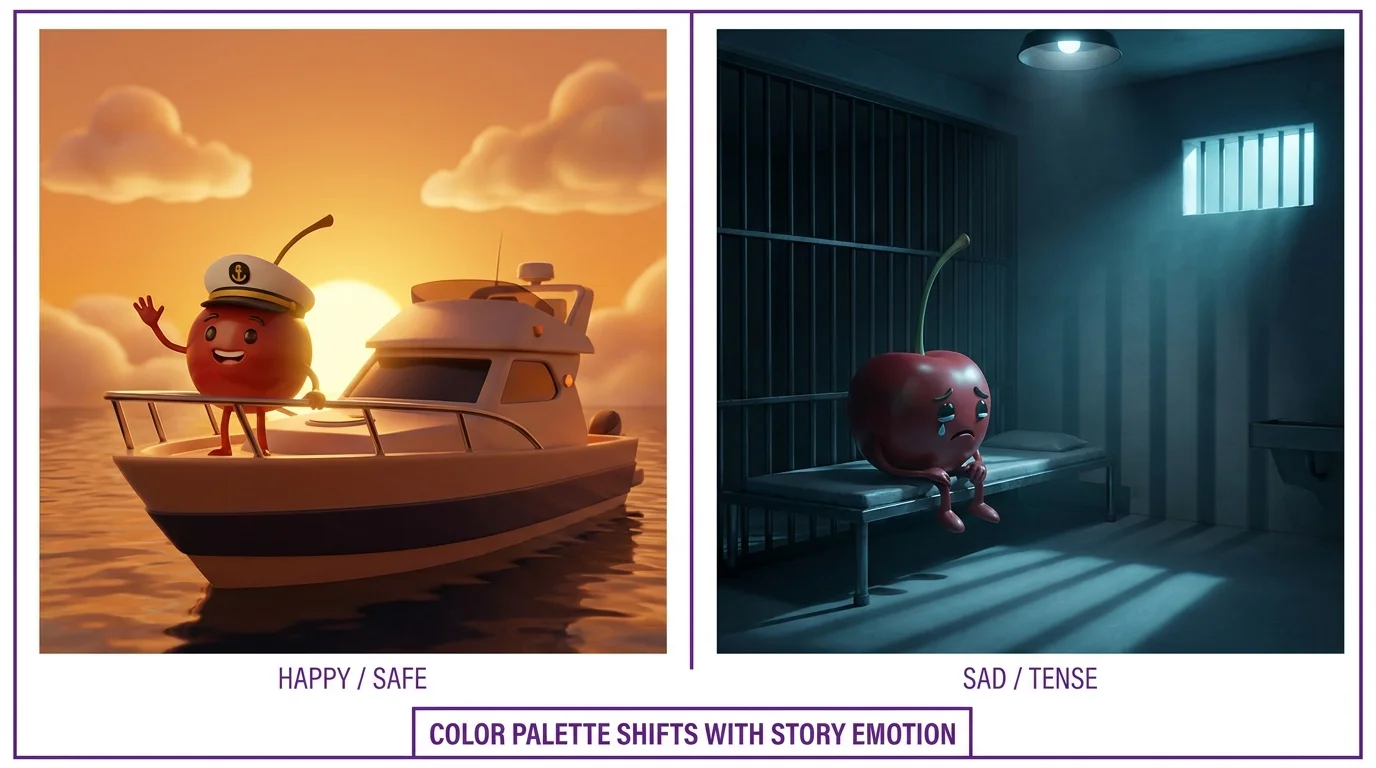
Use color temperature to guide emotional response. Warm scenes (golden, amber, orange) feel safe, hopeful, or nostalgic. Cool scenes (blue, teal, grey) feel tense, dangerous, or sad. Many great stories transition from warm to cool (safety to danger) and back (resolution). This color arc reinforces the emotional arc of your narrative.
Color Contrast for Villain and Hero
Give your protagonist and antagonist contrasting color associations. A hero in warm golden light against a villain in cool blue shadows creates instant visual storytelling. Carry these color associations through every scene - your viewer will subconsciously associate colors with characters.
Case Study: Cinematic Breakdown of "Pushed Overboard"
Our story "Pushed Overboard" demonstrates every technique in this guide. The opening scenes use warm, bright lighting to establish safety. As tension builds, the color palette shifts to cooler tones with more dramatic shadows. The climax uses extreme contrast - dark shadows with sharp highlights. The resolution returns to warmer tones but with a different quality, reflecting the changed emotional state.
Every scene uses deliberate camera angles: establishing shots for new locations, close-ups for emotional beats, low angles during confrontation. The consistent style DNA (cinematic lighting, film grain, shallow DOF) ties all scenes together into a cohesive visual experience.